
Most homeowners expect replacing their siding to improve curb appeal and protect their home from the elements. Few expect it to uncover a major structural problem hiding underneath.
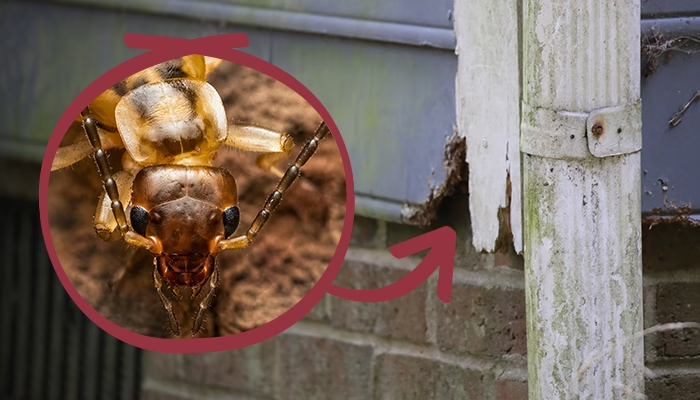
That’s exactly what happened on a recent O.C. Taylor project. While removing old siding from a home, Brent noticed what initially looked like water damage around the chimney. But the more he looked at it, he suspected it may be termite damage.
Unfortunately, he was right.
As the siding continued to come off, termite damage appeared not just in one location, but around multiple corners of the home. Some of the structural framing had been extensively damaged and in one area the termites were still actively feeding. And it led to a conversation he wasn’t expecting to have with the homeowner.
Sometimes the Damage Is Hidden
One of the biggest challenges with termites is that homeowners often have no idea they’re there. In this case, the home was built on a slab foundation, which concealed the damage inside the walls. Unlike homes with crawl spaces, there wasn’t an easy way to spot the warning signs.
Unless you’re removing the siding, it’s nearly impossible to find that type of damage. That’s why Brent immediately advised the homeowner to contact a licensed termite company. The property was treated, bait stations were installed and the homeowner was able to obtain a termite bond before repairs moved forward.
Unfortunately, the problem also delayed the homeowner’s siding project and led to more extensive repairs than replacing siding alone.
Why Removing Old Siding Matters
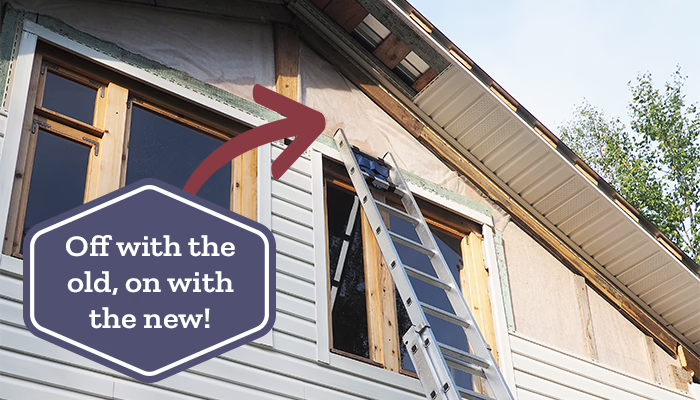
For Brent, the experience reinforced something he has believed for years: when replacing siding, the old siding should come off.
Some contractors install new vinyl siding directly over the existing exterior to save time and money. While that may reduce upfront costs, it can also cover up serious structural problems.
The real danger, Brent explained, was that she could have called a contractor asking for vinyl siding. In many cases, vinyl contractors foam wrap the old siding and nail new vinyl on the outside. That means none of the termite damage would have been discovered.
Removing the old siding gives contractors the opportunity to inspect the home’s framing, identify hidden rot or termite damage and make repairs before they’re buried behind new materials.
What Homeowners Should Watch For
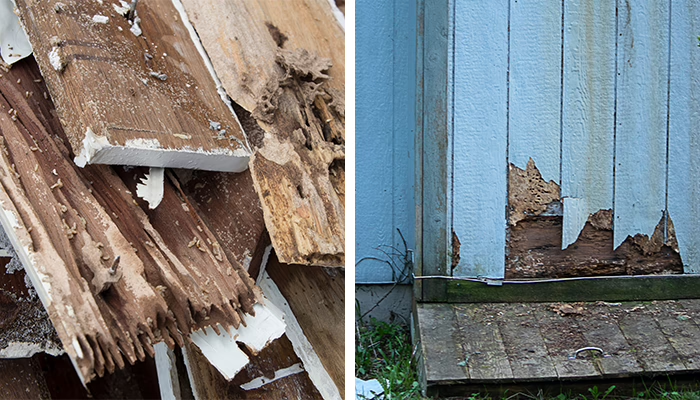
Brent is quick to point out that he’s not a licensed termite inspector, but after years of repairing homes, he has noticed a few warning signs homeowners shouldn’t ignore.
If your home has wood corner boards, unusual vertical tunneling or hollowed-out wood can indicate termite activity rather than typical wood rot. Homes built on slab foundations with brick veneer may also deserve additional attention because termites can travel through small openings in the masonry.
He also recommends that homeowners—especially those with older homes built before the 1990s—consider routine termite inspections and a termite bond if one isn’t already in place. He also recommends getting three quotes to find the best option.
Choosing Materials That Help Protect Your Home

Once the damaged framing was repaired, the home received new siding that offers another layer of protection.
O.C. Taylor uses LP® SmartSide® products, which are engineered with zinc borate, an additive that helps resist fungal decay and termites. While no siding eliminates the need for proper termite prevention and inspections, selecting materials designed with durability in mind can help homeowners protect their investment for years to come.
The Biggest Lesson
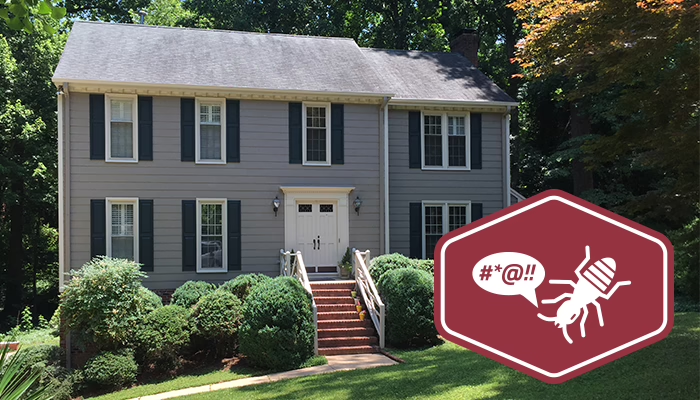
Finding hidden termite damage isn’t news any homeowner wants to hear. But discovering it during a siding replacement is far better than allowing the damage to continue unnoticed.
As Brent puts it: “If you have structural damage, ignorance is not bliss.”
Taking the time to properly remove old siding, inspect the structure underneath and make repairs when necessary helps ensure your home is safe, sound and ready for decades of protection.
That’s exactly the approach O.C. Taylor believes every homeowner deserves.