School’s back in session, but the kids aren’t the only ones going to class. Professor Brent is here to show you the crucial differences between the different types of siding in the area and what’s the smart choice for your home. Between vinyl, wood fiber cement and engineered wood, homeowners in the area face a ton of choices—with each manufacturer and contractor promising durability, visual appeal and long-lasting protection.
We’ve been home repair experts in the Triangle area for over a decade, and we know the difference between what looks good on a website and what stands the test of time and environment. So, grab your notebook and No. 2 pencil, we’re giving you the knowledge you need to be a siding scholar.
Vinyl Siding
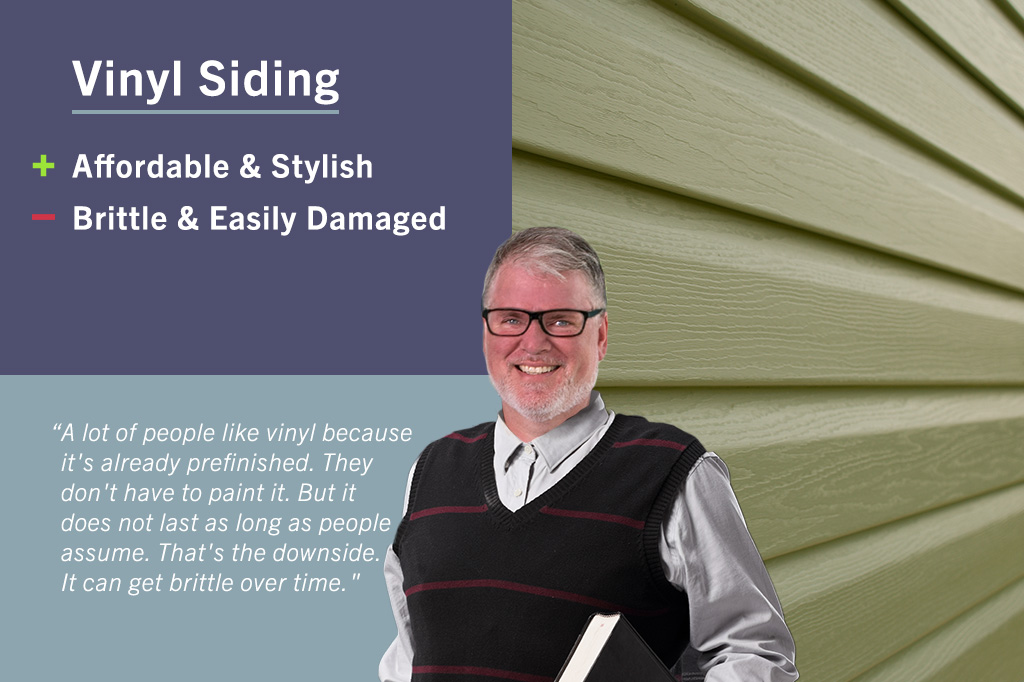
Vinyl siding is one of the most common home exterior-cladding materials in the United States, and has been for some time. It is popular because it is cost-effective, lightweight and available in a wide range of colors and styles. CertainTeed is one of the leading vinyl siding manufacturers and is recognized for its ubiquity and product warranties.
The main advantage of vinyl siding is its affordability. It offers homeowners a budget-friendly way to update curb appeal without requiring painting or heavy maintenance. However, there are limitations. Vinyl will warp in heat or become brittle during extreme temperature fluctuations, which is a concern in the Triangle. Over time, this expansion and contraction cause cracking, allowing moisture to reach the sheathing underneath. Importantly, vinyl siding does not provide the same level of impact protection as other common siding materials.
Wood Fiber Cement Siding
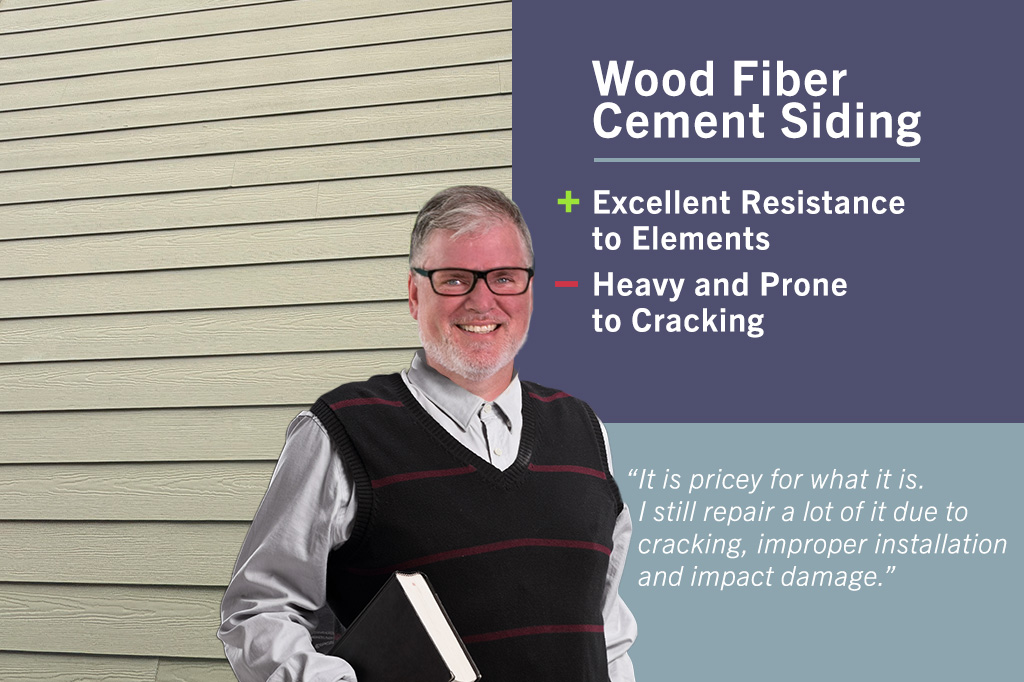
Wood fiber cement siding is designed to be stronger and more resilient than vinyl, and it is a favorite among homeowners seeking a long-lasting upgrade. We see a lot of it in the Falls River area in the Bedford neighborhood.
Wood fiber cement siding is made with a mixture of cement, sand and cellulose fibers. It offers good fire resistance, stands up well against pests and can be manufactured in a variety of shapes and styles. James Hardie and Nichiha are among the more recognizable manufacturers of wood fiber cement. It’s also significantly heavier than most siding materials, which increases installation and repair costs. Besides already having more seams than most siding materials, its rigidity can lead to cracks around windows, doors or other vulnerable points. And once those cracks appear, the siding can absorb and retain water.
Engineered Wood Siding and LP® SmartSide®
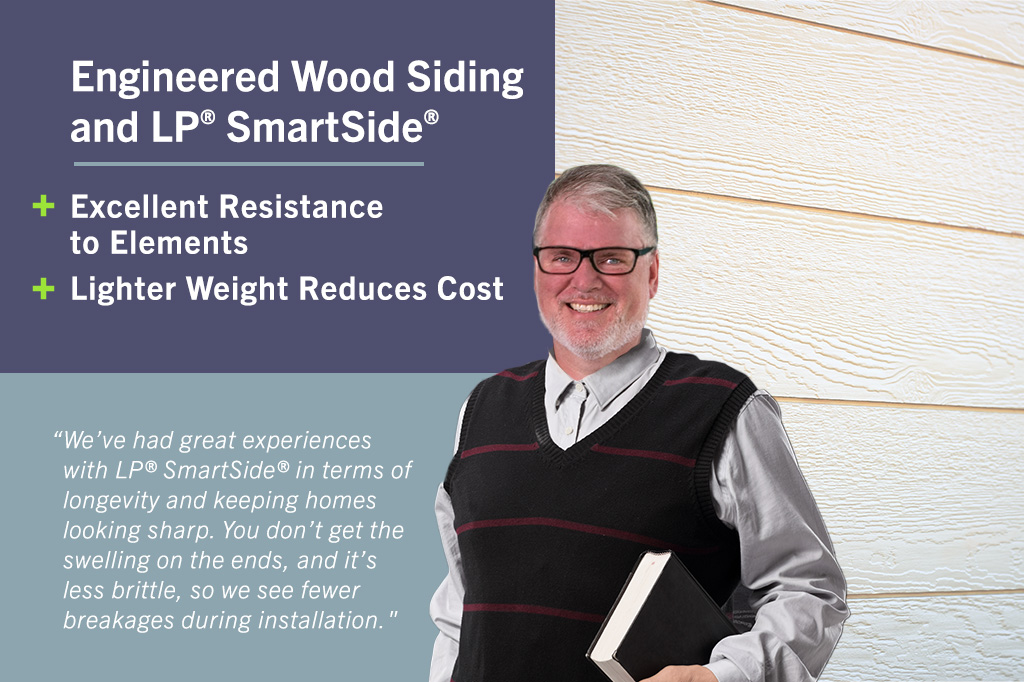
Engineered wood siding, such as LP® SmartSide®, combines the natural look of wood with advanced manufacturing designed to withstand environmental challenges. LP® SmartSide® is treated with a proprietary SmartGuard® process that includes zinc borate, resins, and waxes to resist fungal decay, moisture, and termites.
One of the main advantages of LP® SmartSide® is its flexibility. Unlike wood fiber cement, it expands and contracts with the frame of a home, which helps prevent cracking and water intrusion. The boards are manufactured in 16-foot lengths, which means fewer seams compared to fiber cement’s 12-foot boards. Fewer seams give a cleaner, more polished look while also reducing opportunities for water infiltration.
LP® SmartSide® is lighter and easier to handle than wood fiber cement, yet more sturdy than vinyl, saving you money on installation and repair costs. Its paint adhesion is superior, typically requiring fewer coats of paint and holding color for longer. LP® SmartSide® offers an excellent balance of strength, efficiency, and aesthetics. It is designed to perform well in climates with temperature swings and seasonal weather changes, making it one of the most reliable siding options available.
Wrapping Up
Before we dismiss class, we’ve got some things we want all homeowners to keep in mind as they approach siding projects of their own. We recommend washing your siding once a year with low pressure—not the heavy-duty pressure washer your neighbor brags about—to remove particulates, preserve caulking joints, and keep protective finishes intact.
A common misconception is that siding replacement has to be an all-or-nothing project. While vinyl doesn’t allow for phasing, engineered wood and fiber cement can be replaced one wall at a time, which helps homeowners work within a budget while still protecting their home’s most vulnerable areas.
And let’s not forget the Triangle’s climate. We’re in a transition zone, meaning siding here has to handle freezing winters, blistering summers, and everything in between. Vinyl shifts around, fiber cement resists movement and cracks, but engineered wood like LP® SmartSide® flexes with your home.
Siding is about protecting your investment and choosing a product that stands the test of time. You’ll spot plenty of vinyl siding and engineered wood siding throughout the Triangle, including popular Raleigh neighborhoods like Wood Valley, Oak Park, Glen Forest, Springdale Estates, Ashley Forest, Park Village, Canterbury, Charleston Woods, Umstead Ridge, Lake Anne and Durant Trails. Wherever you live in the Triangle, O.C. Taylor will serve you, guided by Brent’s philosophy: “I always try to be an open book and give honest advice on what I would do if I were in their spot,” says Brent. We will provide you with the best advice for your situation and work with you to make these critical decisions as affordable as possible.
Class dismissed. Join us next month as we compare and contrast the warranties offered by each siding manufacturer.
Ready to talk siding? Contact O.C. Taylor today, and let’s start planning your project.