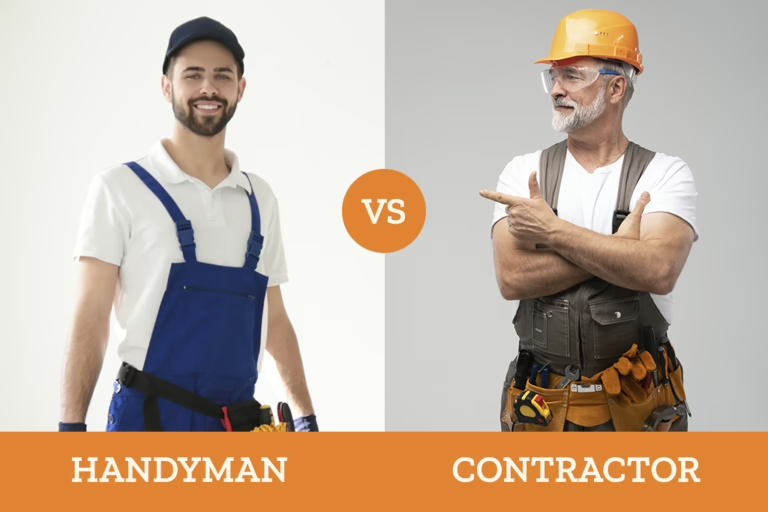
Ever wondered whether your home project calls for a licensed general contractor, or if a handyman (or handywoman, or handy-them) will do the trick? Hiring the right person for the job can save you time and money. Here’s how to tell the difference and get your home on the way to repair.
The Technical Differences
Let’s start with credentials. A licensed general contractor in North Carolina must pass an exam, keep their license current through annual continuing education, and maintain capital minimums depending on their license level (limited, intermediate, or unlimited). “General contractors can either be residential general contractors or building general contractors,” says Brent Taylor, Owner of O.C. Taylor. “Licensees categorized as building contractors can work on commercial and residential projects, while those categorized as residential contractors are limited to residential construction only. I’m a building contractor, so I can do commercial and residential, though I specialize in residential.”

General contractors are also bound by state regulations and are held to a standard by the North Carolina Licensing Board for General Contractors (NCLBGC). Additionally, they pay into a homeowner recovery fund to protect clients in worst-case scenarios. A handyman, on the other hand, doesn’t require licensing unless the project exceeds $40,000, and many smaller jobs fall comfortably below that.
Insurance requirements are another big differentiator. We carry general liability and workers’ compensation insurance for all projects and subcontractors. Many handymen aren’t required to have either, and if something goes wrong, the liability could fall on the homeowner. A simple gutter cleaning becomes a major issue if someone on the job site falls and isn’t insured.

The Practical Differences
So, when is it safe to go the handyman route? Small repairs like changing a lock, patching drywall, hanging shelves, or replacing a light fixture—these are one- or two-person jobs with straightforward solutions. They’re typically quick, don’t require permits, and rarely involve structural changes. Handymen are built for versatility and agility on small-scale projects. You don’t need six people showing up to fix a squeaky door.
But if your project involves tearing out old siding, reframing parts of your home, adding a new roof, or tackling a whole exterior remodel, you’re in general contractor territory. Structural work, multi-trade jobs, and any project that requires a permit should be managed by a licensed general contractor, like O.C. Taylor.
Worried about cost? It’s fair to say a handyman may charge less for minor work, but the price gap closes when you consider the time, expertise, safety, and insurance coverage a general contractor provides.

Why O.C. Taylor Stands Above The Rest
We specialize in coordinating complex scopes of work and bring in skilled trades like licensed electricians or plumbers when needed. “I grew up in the industry. I’m from Raleigh, so I know who the best people are to staff my crew with,” says Brent. Sure, we can swap a light fixture during a big project, but we’ll happily refer you to a trusted handyman if that’s all you need.
Our jobs typically involve teams of 3 to 10 professionals, depending on the scope. That difference matters when you’re coordinating multiple phases of a job, need efficient timelines, or want to avoid being your own project manager. “ So I tend to look at things like half-day job, full-day job,” says Brent. “If it doesn’t entail half a day’s work for three people, that’s in the realm of a handyman. If it’s more, then go ahead and give us a call.“
Still unsure if you need a general contractor or a handyman? Ask the following questions during your first call:
Are permits required?
Will structural elements be altered?
Are licensed trades involved?
Will this job require insurance?
If the answer to any of those questions is yes, you should consult a general contractor.
O.C. Taylor is built for the big stuff. From full exterior remodels to siding upgrades and beyond, we’ve got the crew, the credentials, and the coordination skills to bring your vision to life—no guesswork required. Get your free quote today!